
Your Fall Home Maintenance Checklist, Tuned to Where You Live
Fall jobs depend on where you live. This fall home maintenance checklist starts with the basics every home needs, then jumps to your climate: freezing winters, mild and wet, hot, dry and wildfire-prone, or humid and hurricane-prone.
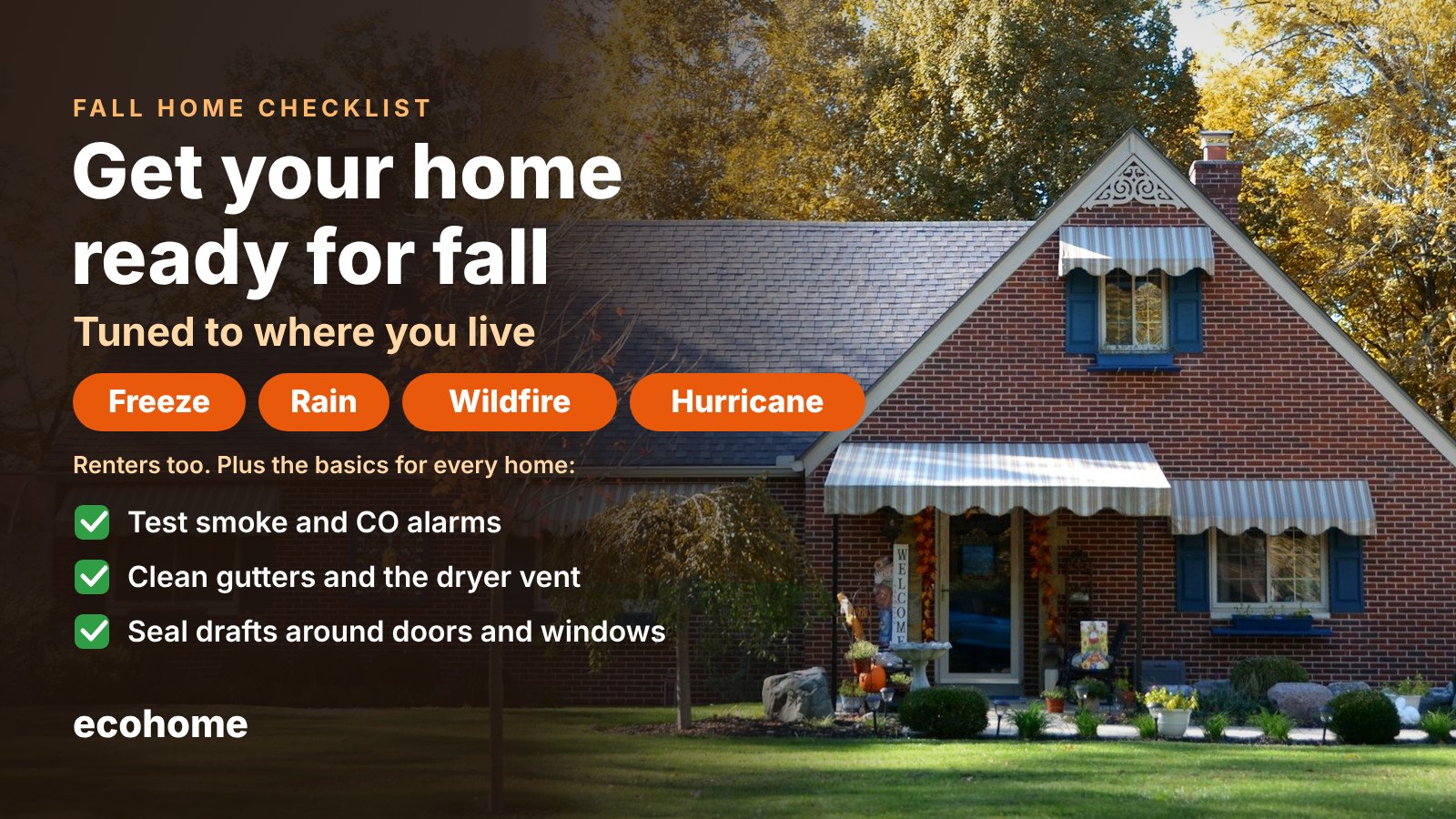
A fall checklist for Minnesota looks very different from one for Phoenix or Miami. A few jobs apply almost everywhere, so those come first.
Tips from official sources link straight to them. If your appliance manual or local rules say something different, follow those.
Key takeaways
- Every home: test smoke and CO alarms, check the HVAC filter, clean the gutters and dryer vent, check the water heater setting and sediment, drain outdoor faucets and seal drafts.
- Then add the jobs for your climate: freezing winters, mild and wet, hot, dry and wildfire-prone, or humid and hurricane-prone.
- Renters: your lease and local law decide which jobs are yours and which are your landlord’s.
- ecohome’s free maintenance reminders give you suggested schedules tuned to your local climate, with reminders 7 days ahead and on the due date.
Jump to: Every home · Freezing winters · Mild and wet · Hot, dry and wildfire-prone · Humid and hurricane-prone · Renters
Every home: the fall maintenance basics
Smoke and carbon monoxide alarms
- Press the test button on every smoke alarm. The U.S. Fire Administration says to test smoke alarms monthly. Replace 9-volt and backup batteries at least once a year, and replace the whole alarm every 10 years. If your alarm has a nonreplaceable 10-year battery, replace the whole alarm according to the manufacturer’s instructions.
- Make sure you have smoke alarms inside each bedroom, outside each sleeping area and on every level of the home.
- Test carbon monoxide alarms too. USFA says to test CO alarms at least once a month. Its home fire safety checklist asks whether you have one on each level and whether they’re less than 7 years old.
Heating system and filter
- ENERGY STAR’s maintenance checklist says to inspect, clean or change the air filter in your furnace, heat pump or central air once a month.
- The same checklist recommends an annual pre-season check-up by a contractor, with the heating system checked in the fall. Book it before the first cold snap.
Gutters and drainage
Once most of the leaves are down, clear your gutters. The EPA’s guide to mold and moisture says to clean and repair roof gutters regularly and to make sure the ground slopes away from your foundation. Use a stable ladder, or hire someone for second-story gutters.
Dryer vent
USFA’s clothes dryer safety flyer lists these jobs:
- Clean the lint filter before and after each cycle.
- Clean the back of the dryer, where lint builds up.
- Check that the vent behind the dryer isn’t damaged, crushed or blocked.
- Make sure the outdoor vent cover opens when the dryer is running.
Water heater
The Department of Energy’s Energy Saver guide suggests setting a tank water heater to 120°F. It also suggests draining a quart of water from the tank every 3 months to clear sediment. Check your heater’s manual first, especially if it’s tankless or a heat pump model, because the steps differ.
While you’re there, check whether it’s still under warranty before you book a repair. That’s much easier if you keep appliance receipts and warranties together.
Outdoor faucets and hoses
The American Red Cross advice on preventing frozen pipes says to remove, drain and store outdoor hoses. Then close the inside valve that feeds each outdoor faucet and open the faucet outside so the water drains out. If your area gets even occasional freezes, this is worth doing.
Drafts and weatherstripping
The same Energy Saver guide calls sealing one of the quickest money- and energy-saving jobs. Caulk, seal and weatherstrip seams, cracks and openings to the outside. Start with doors and windows where you can feel a draft.
Don’t want to rebuild this list next fall? ecohome’s free home maintenance reminders suggest a schedule tuned to your ZIP code and remind you 7 days before each job is due. Get the app.
Freezing winters
If you get hard freezes and snow, protecting your pipes and getting your heating ready come first.
- Insulate exposed pipes. The Red Cross says to insulate both hot and cold pipes in cold areas such as garages and under sinks. In a deep freeze, open sink cabinet doors so warm air reaches the plumbing, and let a faucet on exposed pipes drip cold water.
- Chimney and vents. USFA’s winter fire safety tips say to have a qualified professional clean and inspect your chimney and vents every year.
- Space heaters. The same tips say to keep anything that can burn at least 3 feet from any heat source, and to plug only one heat-producing appliance into an outlet at a time.
- Generators. If you keep one for outages, USFA says to keep portable generators outside and away from windows, and the CPSC says to place them at least 20 feet from your home.
Renting? Ask your landlord who services the furnace and chimney, and report any heating or frozen-pipe problem in writing right away.
Mild and wet
Where fall brings months of rain rather than snow, the main job is keeping water out and moisture down.
- Gutters, downspouts and grading. Clean the gutters, then watch them in the first heavy rain. Water should drain away from the house, not pool against it.
- Indoor humidity. The EPA suggests keeping indoor humidity below 60 percent, ideally between 30 and 50 percent.
- Leaks. The EPA says that if wet materials are dried within 24 to 48 hours of a leak, in most cases mold won’t grow. Check under sinks and around windows after the first big storms.
- Exhaust fans. The same EPA guide says to run the bathroom fan or open a window when showering, and to use exhaust fans or open windows whenever you cook.
- Flood coverage. If flooding is a risk where you live, don’t wait for the forecast. FEMA notes there’s typically a 30-day waiting period before a new flood policy takes effect, with some exceptions.
Renting? Gutters and grading are usually the landlord’s job. Running fans, keeping humidity down and reporting leaks quickly are yours.
Hot, dry and wildfire-prone
In dry regions, fire risk doesn’t always end with summer, so your fall cleanup can double as wildfire prep.
- Roof and gutters. CAL FIRE’s guidance on hardening your home says to regularly clear leaves, pine needles and other debris from the roof, and to keep gutters free of plant debris so embers can’t ignite it.
- The first 5 feet. CAL FIRE’s defensible space guidance describes Zone 0 as the area 0 to 5 feet from your home, where the focus is on reducing anything that can burn. For the next zone out, the same page says to clear flammable plants and items from under decks, balconies and stairs.
- Fire weather alerts. The National Weather Service issues a Red Flag Warning when forecasters expect weather that could lead to extreme burning conditions. On those days, follow any local burn restrictions.
- Ember-resistant vents. CAL FIRE’s home hardening guidance says to install 1/16-inch to 1/8-inch noncombustible, corrosion-resistant metal mesh over vents to block embers, and to avoid fiberglass or plastic mesh, which can melt.
Renting? Ask your landlord who clears the roof, gutters and the area around the house, and keep your own patio or balcony clear of anything that can burn.
Humid and hurricane-prone
NOAA says the Atlantic hurricane season runs from June 1 to November 30, so fall is still part of it. Reading this after the season ends? Keep these steps for next June.
- Clear hazards. FEMA’s six ways to prepare your home include cleaning out gutters so they drain, trimming or removing trees that could fall on the house, and securing things like barbecues or gas canisters that would be unsafe to bring inside.
- Openings. The National Weather Service guide to strengthening your home calls the garage door the most vulnerable part of the home. It also suggests having the right plywood, steel or aluminum panels ready to board up windows and doors.
- Generators. The CPSC says to run portable generators outdoors only, at least 20 feet from your home and other buildings, and never in a garage or basement.
- Photos of what you own. FEMA also suggests taking pictures of furniture, appliances and any valuables you wouldn’t take with you if you evacuate. Do it now, while everything is in good shape, and document your home for insurance.
Renting? Ask your landlord now who puts up shutters or panels. FloodSmart notes that flood damage is often excluded from renters insurance, so check your policy, and remember that a new flood policy typically has a 30-day waiting period.
Humid homes also benefit from the moisture advice in the mild and wet section, especially the indoor humidity range.
Fall checklist for renters
If you rent, some of these jobs may be your landlord’s and some may be yours. Your lease and your local law decide which is which, and the rules vary by place.
- Check your lease for who handles the furnace, water heater, filters, gutters and alarms.
- Report problems in writing, such as an alarm that fails its test or a draft you can’t fix, and keep a copy.
- Small jobs are often fine for renters. The Department of Energy’s tips for renters include caulking air leaks and weatherstripping windows and doors. Check your lease first.
Let ecohome remember it
A checklist only helps if you remember it next fall, and the fall after that. ecohome’s home maintenance reminders take care of the remembering:
- Suggested schedules for your home and the items in it, water heater tasks included.
- Tuned to your local climate from your household’s ZIP code in the US, or PIN code in India.
- Reminders 7 days ahead and on the due date. Mark a job done and the next date resets.
- In the US: weather alerts from the National Weather Service, and local rules with links to the official source. Always check the source, because rules change.
- Own or rent? Tell ecohome which, and renters see the landlord’s jobs marked.
Household members are free, so everyone who shares the chores can join your household.
Get your fall checklist on a schedule
Suggested schedules tuned to your climate, with reminders before each job is due. Free on iPhone, Android and the web. No credit card.

Or use it in your browser at web.ecohome.one.