Stop Buying What You Already Own
We often re-buy things we already own because we can’t see what we have. The fix isn’t willpower. It’s being able to check before you buy.
Open the drawer where the chargers live. Go on. If you’re like most of us, you might find old cables for a phone you no longer use, a spare pair of scissors, a tube of glue that’s gone solid, and at least one mystery remote. Now picture the whole house: the spare batteries you bought because you couldn’t find the spare batteries, the second can of the same paint, the black T-shirt that’s basically identical to the one you already have. A pattern starts to show.
Often we don’t over-buy because we’re careless. We over-buy because we can’t see what we already own. And that small, invisible habit adds up to real money out of your pocket and needless waste into the world.
Key takeaways
- We often re-buy things we already own because we can’t see what we have, and it costs money and creates waste.
- The fix is visibility, not willpower: check before you buy, and shop your own home first.
- Borrow or rent the things you’ll rarely use, and lend or sell what you don’t need.
- ecohome gives you a searchable record of what you own, so “do I already have this?” has a quick answer.
Why we built ecohome
ecohome started from exactly this problem. Our founder, Saravanan, and his wife looked around their home and found multiples of the same things: more than one Instant Pot, duplicate kitchenware, several vacuum cleaners, a lot of fans, and plenty of tools and gadgets bought by both of them over the years. Nobody was careless. They just couldn’t see everything they already owned in one place.
Why we re-buy things we already have
It comes down to memory and friction. Our homes hold far more than our minds can track. So when you need something, you face a choice: spend a while hunting through closets and drawers where it might be, or spend a minute and a few dollars ordering a fresh one with fast delivery.
Often, the new one wins. It’s faster, it’s certain, and the cost feels trivial in the moment. The problem is that “trivial in the moment” happens over and over, all year, across every kind of thing you own. The duplicate batteries and the forgotten pantry staples don’t feel like a budget line. Together, they are one.
And there’s a second cost that doesn’t show up on the receipt at all.
The hidden environmental price of the duplicate
Every duplicate purchase is a small environmental event. Something was made, packaged and shipped, and will eventually be thrown away, often while its twin sits unused in a drawer a few steps away. Buying things you already own is one of the purest forms of waste there is, because you’re not even getting the use you paid for.
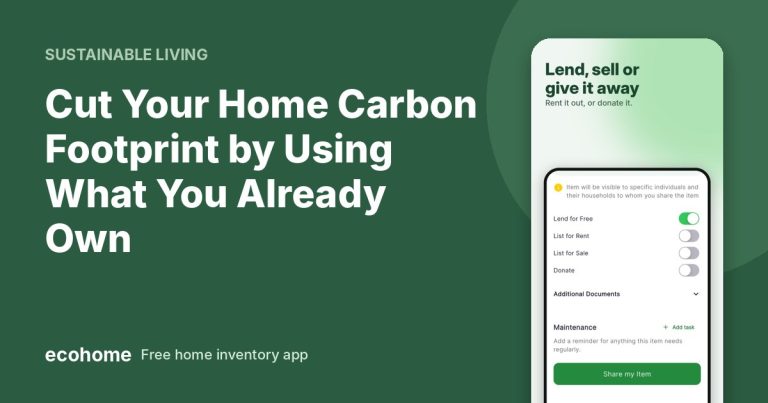
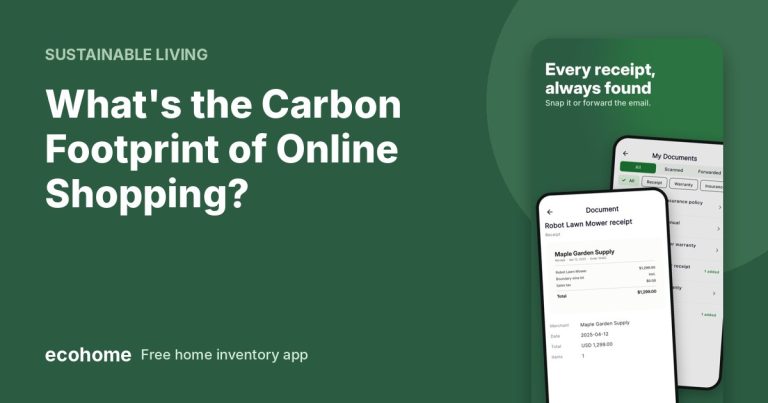
The most sustainable item is usually the one you already have. Not the recycled one, not the “eco” version, not the one with the green label: the one already in your house. “Use what you have” skips the making and the shipping entirely. (We look at this idea more closely in cutting your home carbon footprint by using what you already own, and in the carbon footprint of online shopping.)
The encouraging part is that the fix isn’t about willpower or guilt. It’s about visibility.
Seeing what you own makes it easier to change
You don’t need to become a minimalist or take a vow against shopping. You just need to be able to answer one question before you buy: do I already own this?
When the answer is easy to check, it’s much easier to skip the duplicate. You’re not forcing yourself to resist. The reason you were buying, not knowing, is gone. You haven’t given anything up. You’ve just removed the guesswork.
A few habits make this concrete:
- Check before you buy. A quick search of your own home (“do I have masking tape?”) catches a duplicate before it happens.
- Shop your own house first. Before a project, walk the rooms it involves. The drill, the spare tiles and the half-used paint are often already there.
- Notice your repeat offenders. Many of us have a few categories we over-buy: cleaning supplies, cables, candles, plain tops, kids’ craft supplies. Naming yours is half the battle.
- Borrow the rare stuff instead of owning it. The thing you’ll only use now and then, like a pressure washer, a projector or a folding table, is a perfect thing to borrow from a neighbor rather than buy and store.
From “buy less” to “share more”
That last habit is where this gets fun, and where the savings add up. Once you can see what you own, you can also see what you could lend, and what you could borrow instead of buy. Picture a street where every household buys its own drill, uses it now and then, and keeps it in the garage the rest of the time. Most of those drills didn’t need to be bought.
Sharing turns “stop buying” from a restriction into a community upgrade. You buy less, your neighbors buy less, and the things you all own actually get used. That’s the future we think is worth building: not owning more, but owning wisely and sharing what we can.
Sharing isn’t the only option, either. Something you rarely use can be rented to someone who needs it for a weekend. Something you’re done with can be sold, so it keeps working in someone else’s home instead of sitting in yours.
See also
How ecohome helps you see, and stop
ecohome gives you a searchable picture of everything in your home, so “do I already own this?” takes a quick search instead of a wishful guess. Add items with a photo and let AI fill in the details, or scan a barcode. Organize them by room or category. The next time you’re standing in a store wondering whether you need another one, you can check. You can also ask EcoBot, ecohome’s assistant, which answers from your own inventory, receipts and documents.
Household members are free, so everyone at home can check the same list before they buy.
That same record does double duty. It lets you save photos of your receipts and warranties to each item, and it’s exactly what you’d reach for after a loss, when an insurer wants proof of what you owned.
And because ecohome is built for sharing, you can lend and borrow with people you know. You can also rent items out by the day, week or month, or sell what you no longer use. Less clutter, less spending, less waste, and a home where what you own is what you actually use.
New to all this? Start with what is a home inventory app, then read how to choose a home inventory app.
Know what you own. Share what you can. Buy only what you truly need.
See everything you own in one place
Check before you buy, and share what you rarely use. Free on iPhone, Android and the web. No credit card.

Or use it in your browser at web.ecohome.one.